

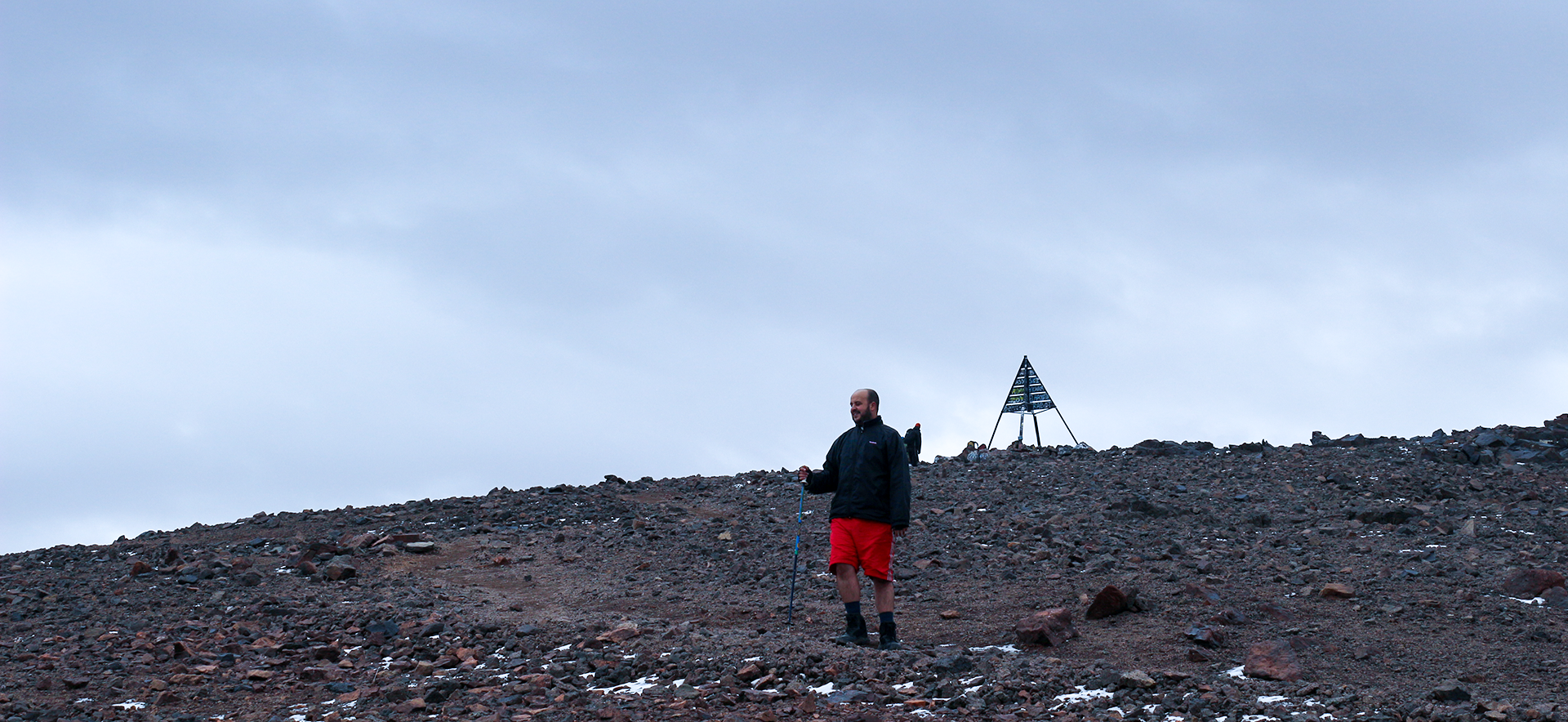
For a trek in the Atlas Mountains, pack in layers: a warm insulating jacket, a waterproof shell, sturdy broken-in boots, a sleeping bag or liner for the refuge, and sun protection. Mornings and nights at altitude are cold even in summer, while midday in the valley can be hot. The list below covers what we recommend for a typical Toubkal trek of 2 to 3 days, and what to add in winter.
The golden rule: layers, not bulk
Temperatures change fast between Imlil (about 1,740 m), the Neltner Refuge (3,207 m) and the 4,167 m summit. Several thin layers that you can add or remove work better than one thick jacket. Mules carry your main bag between stops, so you only walk with a small daypack. Keep the weight of your main duffel reasonable, as muleteers have limits, and ask us for the current guideline.
Clothing
- Base layers: two moisture-wicking t-shirts (synthetic or merino). Avoid cotton, which stays wet and cold.
- Mid layer: a fleece or light insulated jacket.
- Warm layer: a down or synthetic jacket for the refuge and the summit morning.
- Waterproof shell: a light rain jacket that also blocks wind. Waterproof trousers are useful in spring and winter.
- Trekking trousers: one or two pairs of quick-drying trousers. Shorts are fine in summer on lower trails.
- Thermal base layer: top and leggings for the refuge night and summit day.
- Underwear and socks: 2 to 3 pairs of hiking socks, wool or synthetic, plus a clean pair for the refuge.
- Hat, buff and gloves: a warm hat and gloves are essential for summit morning. A sun hat for the way up.
Footwear
- Hiking boots with ankle support and a stiff, grippy sole. Break them in before you arrive. New boots are the number one cause of blisters.
- Light shoes or sandals for the refuge and for evenings.
- Gaiters are optional in summer and helpful on scree or snow.
Backpack and carrying gear
- Daypack of 25 to 35 litres with a waist belt and rain cover.
- Trekking poles: strongly recommended. They take pressure off your knees on the long descent.
- Duffel or soft bag for the mule. Waterproof or lined with a plastic bag.
- Water bottles or bladder with 2 to 3 litres capacity.
Sleeping at the refuge
The Neltner Refuge provides mattresses and blankets in shared dormitories, but conditions are simple.
- Sleeping bag or a warm liner: cold nights make a bag very welcome, especially outside summer.
- Ear plugs and eye mask: dormitories can be noisy and bright early in the morning.
- Head torch with spare batteries: essential for the pre-dawn summit start.
- Quick-dry towel and toiletries: showers are basic and sometimes cold.
Health, altitude and sun
- Sun protection: sunglasses (category 3 or 4), high-SPF sun cream and lip balm. The sun is strong at altitude.
- Personal medication and a small first aid kit: plasters, blister dressings, painkillers, rehydration salts. Your guide carries a main kit.
- Altitude: discuss altitude medication with your doctor before you travel if you are concerned.
- Snacks: nuts, dried fruit, energy bars and a few sweets. Meals are provided, but extra snacks help on summit day.
- Water purification: tablets are a useful backup. Bottled water is available in Imlil and at some stops.
Documents and small extras
- Passport copy, travel insurance details and emergency contacts.
- Insurance that covers trekking up to 4,200 m. Check the policy wording.
- Cash in Moroccan dirhams for tips, drinks and small shops. There are no ATMs on the trail.
- Power bank. Phone signal is patchy in the valleys and cold drains batteries.
- A small notebook, camera, and a plastic bag for rubbish.
Extra gear for winter treks
In winter, Toubkal is a snow climb. Add insulated waterproof boots compatible with crampons, crampons and an ice axe (we can arrange hire), a warmer down jacket, thicker gloves with spare liners, a balaclava, goggles, and extra layers. Your guide will confirm exactly what is required based on conditions.
What to leave at home
- Cotton clothing and heavy jeans.
- Large, heavy suitcases. A soft bag is easier for the mules.
- Expensive jewellery or valuables you do not need on the trail.
- Single-use plastic where you can. Bring a refillable bottle.
Printable summary
| Category | Must-have items |
|---|---|
| Clothing | Base layers, fleece, down jacket, rain shell, trousers, hat, gloves |
| Feet | Broken-in boots, wool socks, light shoes |
| Carrying | 25 to 35 L daypack, poles, duffel for mule |
| Sleep | Sleeping bag or liner, ear plugs, head torch |
| Health | Sun cream, sunglasses, first aid, snacks, water bottles |
| Documents | Passport, insurance, dirhams |
Not sure what to bring?
Send us your dates and route, and we will give you a custom checklist and tell you what you can hire locally. Contact us or read our Toubkal trek guide.
FAQ
What should I wear to climb Toubkal? Layers: a base layer, fleece, insulating jacket, waterproof shell, hiking trousers, boots, hat and gloves.
Do I need a sleeping bag for the Toubkal refuge? Blankets are provided, but a sleeping bag or warm liner is recommended, particularly outside summer.
Can I hire trekking gear in Morocco? Basic items like poles, sleeping bags and, in winter, crampons and ice axes can often be arranged in Imlil or through us. Ask when you book.
Do I need trekking poles? They are not mandatory, but most trekkers are glad to have them on the descent.

No comments on this article yet. Join the conversation!